
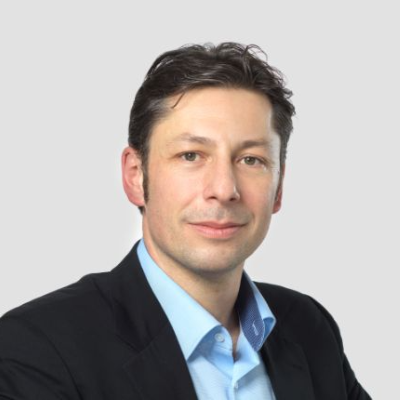
Herr Prof. Dr. Stefan Grösser ist Professor für Decision Sciences und Policy am Departement Technik und Informatik der Berner Fachhochschule in Biel und leitet die Forschungsgruppe Management Science, Innovation, Sustainability and Entrepreneurship (MISE). Zudem ist er in der Lehre des Bachelor-Studiengangs Wirtschaftsingenieurwesen sowie in den Masterstudiengängen Master of Science in Engineering (Vertiefung Business Engineering) und Master of Science in Circularity and Sustainability tätig.
Seine Lehr- und Forschungstätigkeiten umfassen unter anderem Simulationsmethodik, Innovationsmanagement, Business Analytics sowie neue Technologien. Inhaltlich konzentriert er sich insbesondere auf Entscheidungsfindung und Strategieinstrumente, System Dynamics und agentenbasierte Modellierung, Geschäftsmodelle sowie Kreislaufwirtschaft und Nachhaltigkeit.
Prof. Grösser arbeitet seit 2011 an der Berner Fachhochschule und ist seit 2016 Professor für Decision Sciences and Policy. Zuvor war er Professor für strategisches Management sowie Leiter verschiedener Forschungs- und Strategiebereiche innerhalb der Hochschule. Weitere berufliche Stationen umfassen eine Post-Doc-Tätigkeit am Massachusetts Institute of Technology (MIT) sowie wissenschaftliche Tätigkeiten an der Universität St. Gallen und der Universität Bern. Er promovierte an der Universität St. Gallen und war Gastforscher an der Sloan School of Management des MIT. Zuvor absolvierte er einen Master of Philosophy an der Universität Bergen (Norwegen) sowie ein technisch orientiertes BWL-Diplomstudium an der Universität Stuttgart.
Kontakt:
Prof. Dr. Stefan Grösser
Bern University of Applied Sciences
School of Engineering and Information Technology
Quellgasse 21
CH-2501 Biel

- Management Science, Innovation, Sustainability and Entrepreneurship (MISE)
- Sept. 2022 - Mai 2023
HEM Higher Education Management | HEM Executive
Executive Programme für Führungskräfte an schweizerischen Fachhochschulen und Pädagogischen Hochschulen. - 2010 - 2011
MIT Sloan School of Management | Post-Doc, Management, SimulationPost-Doc, Management, Simulation - 2006–2011
Universität St.Gallen (HSG) | PhD, ManagementPhD, Management - 2004–2006
Universitetet i Bergen (UiB) | Master of Philosophy, System DynamicsMaster of Philosophy, System Dynamic - 2000–2004
Universität Stuttgart | Master, Business AdministrationMaster, Business Administration
Berner Fachhochschule BFH
- Aug. 2016 - Heute | Professor of Decision Sciences
- Feb. 2017 - Heute | Research Group Leader on Management Science, Innovation, Sustainability and Entrepreneurship
- Aug. 2016 - Heute | Profile Director "Business Engineering" in the MSc Engineering Profile Director "Business Engineering"
- Aug. 2016 - Aug. 2025 | Dean of Industrial Engineering and Management Science
- Aug. 2011 - Feb. 2017 | Professor of Strategic Management and Organization
Nov. 2024 - Heute | Mitglied Schulkommission Bern Altstadt-Schosshalde
- Simulationsmethodik, Innovationsmanagement, Business Analytics
Interacting with the Water Cycle – Towards an Experimental Paradigm
EUROCAST 2024
Schaffernicht, M. F., Groesser, S. N., et al.
A study presenting new approaches for using learning analytics to enhance the teaching and understanding of system dynamics modeling.
Assessment of constraints in the European Union photovoltaics circular supply chain for enhanced circularity
Sustainability
Radavičius, T., Groesser, S. N., & Tvaronavičienė, M.
This study analyzes the barriers and limitations within the EU solar panel supply chain to improve circular economy practices and sustainability.
A Systematic Literature Review of the Solar Photovoltaic Value Chain for a Circular Economy
Sustainability
Franco, M. A., & Groesser, S. N.
A comprehensive review of existing literature regarding the lifecycle of solar PV systems, focusing on opportunities for closing material loops.
Gabler Wirtschaftslexikon: Dynamische Komplexität
Gabler Wirtschaftslexikon
Groesser, S. N.
An encyclopedic entry defining the concept of dynamic complexity within economic and organizational systems.
A competence development framework for learning and teaching system dynamics
System Dynamics Review
Schaffernicht, M. F. G., & Groesser, S. N.
This paper proposes a structured framework for developing and assessing core competencies in the field of system dynamics education.
Reframing the relevance of research to practice
European Management Journal
Fox, S., & Groesser, S. N.
An examination of the gap between academic research and practical application, offering new perspectives on how to bridge these domains.
Business model analysis using computational modeling
Journal of Management Control
Groesser, S. N., & Jovy, N.
This research utilizes computational modeling techniques to analyze, test, and optimize various business model architectures.
The SEXTANT software
European Journal of Operational Research
Schaffernicht, M. F., & Groesser, S. N.
A presentation of the SEXTANT software tool designed to support the comparison and analysis of mental models in system dynamics.
Mental models of dynamic systems
System Dynamics Review
Groesser, S. N., & Schaffernicht, M.
An investigation into how individuals conceptualize dynamic systems and the implications for decision-making and learning.
Contributions to model validation
System Dynamics Review
Groesser, S. N., & Schwaninger, M.
This paper discusses various methodological approaches and criteria for validating system dynamics and simulation models.
How do we know who to include in collaborative research
European Journal of Operational Research
Müller, M. O., Groesser, S., & Ulli-Beer, S.
A study addressing the methodological challenges of stakeholder identification and selection in collaborative research projects.
A comprehensive method for comparing mental models
European Journal of Operational Research
Schaffernicht, M., & Groesser, S. N.
The authors introduce a rigorous methodology for quantitatively and qualitatively comparing mental models held by different individuals.
Model-based theory-building with system dynamics
System Dynamics Review
Schwaninger, M., & Groesser, S. N.
This foundational paper explores how system dynamics modeling can be effectively used to build and refine theoretical constructs.
- Fakultäten- und Fachbereichstag Wirtschaftsingenieurwesen e.V.
Arbeitskreis Wirtschaftsingenieurwissenschaft